
At Green care we provide excellent health care diagnostic service for every patients and try to create comfortable environment for them. Below you will find detailed information about our services, which will allow you to familiarize yourself with our procedures before they occur. It is our goal to make your experience with Green Care easy and comfortable.
SERVICES
- Home
- SERVICES
X-RAY MODALITY
Our comprehensive X-ray service includes:
- Standard X-ray examinations
- Dental X-rays (including OPG and Lateral Cephalometric)
- Immigration chest X-rays (Approved site for some embassies)
Patients can also use our Walk-in service Monday – Friday between 9am to 5pm. All they will need is a signed referral form. Weekend appointments are available and we also offer Late Evening Availability by prior arrangement.
All our X-rays are reported by our expert Consultant Radiologists. Each has their own interests and specialties and this is what allows us to provide such a wide range of X-ray services.
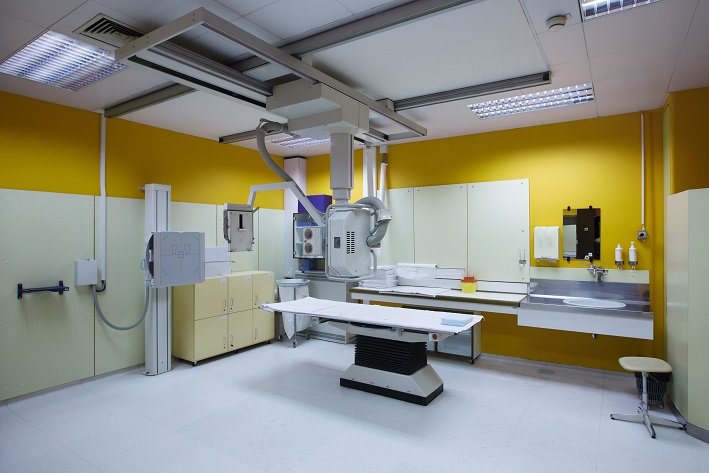
X-ray room at Green Care
MRI MODALITY
An MRI utilizes a magnetic field and pulses of radio waves to provide a comprehensive detailed picture of organs and structures inside the body. MRI differs from CT and X-Ray in that it does not use radiation to obtain its images. MRI is used to detect problems associated with the head and brain, chest, abdomen, blood vessels, bones, joints and spine. Our MRI modality is a Hitachi Airis Open Sided MRI. Our modality is specially designed for claustrophobic patients or patients who may not fit comfortably in a closed MRI machine.
We’re able to perform a wide range of MRI scans. Our areas of expertise include:
- Spine
- Head & neck
- Neurology
- Musculoskeletal
- Elite Sports Injuries
- Temporamandibular Dysfunction
- Gynaecology and Abdomen
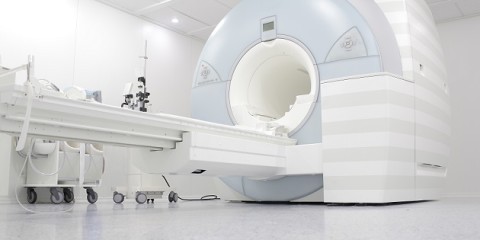
MRI machine is ready to research at Green Care
CT MODALITY
A CT scan, or CAT scan, is a noninvasive medical test that helps physicians diagnose and treat medical conditions. CT scanning combines special x-ray equipment with sophisticated computers to produce multiple images or pictures of the inside of the body. CT is used to detect abnormalities of the head, chest, abdomen and blood vessels. Our CT modality is the Somatom Emotion 16 by Siemens, which provides a 16-slice configuration.
We’re committed to providing the most convenient and highest quality CT scan X-ray imaging services for patients and their physicians. We offer:
- ease of scheduling with same-day or next-day appointments
- convenient imaging locations
- board certified Green Care radiologists to interpret your results as if their life depended on it, too
- the latest generation of imaging technology that produces the clearest images
- highly trained technologists to ensure your comfort and safety
- an integrated electronic medical records system that allows your physician to see your images within minutes of the test – and provides easy access to those images to other health care providers involved in your future care
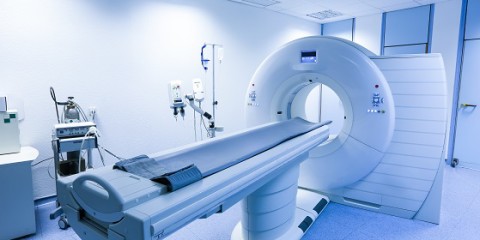
CT (Computed tomography) scanner at Green Care.
ULTRASOUND MODALITY
Ultrasound therapy is just about the most popular of the Electrophysical agents (EPA’s), though strictly speaking, it is not ‘electrotherapy’ even though it is widely referred to as an electrotherapy modality.
We’re specialists in almost all types of ultrasound, including:
- General
- Musculoskeletal
- Paediatrics
- Gynaecology
- Renal
- Breast
- Prostate
- Ultrasound Guided Injections
- Fine Needle Aspirations
- Vascular Carotid Doppler’s
We want to know that all our patients are as relaxed and as well cared for cared as possible. So you can be confident you’ll be in good hands. We’re even conveniently located.
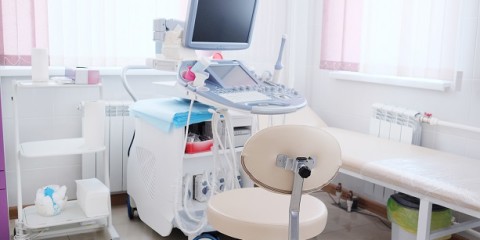
Interior of Green Care’s medical room with ultrasound diagnostic equipment
MAMMOGRAM
Mammography is a specific type of imaging that uses a low-dose x-ray system to examine breasts. A mammography exam, called a mammogram, is used to aid in the early detection and diagnosis of breast diseases in women.
Our Mammography Services provide you with:
- Skilled female technicians who care about your comfort and concerns
- Board-certified and fellowship-trained breast radiologists to accurately read test results
- Advanced technology that ensures minimal radiation exposure
- Equipment that is fully FDA-certified and accredited by the American College of Radiology
How to Prepare for your Mammogram
- Schedule your appointment after your period when your breasts are least sensitive.
- Do not apply deodorant/powders/lotions to the breast and underarm area as they may show up on the films.
- If your breasts are very sensitive, you may wish to take Tylenol/ibuprofen about one hour prior to your scheduled appointment time.
- Avoid caffeine (coffee, tea, soda and chocolate) for several days prior to your appointment, which may also reduce the discomfort of the exam.
- Wear a two-piece outfit the day of your appointment, for your own convenience and comfort.
- If you have had a mammogram at a different facility in the past, be sure to acquire those films for comparison, which will aid in the most accurate reading possible.
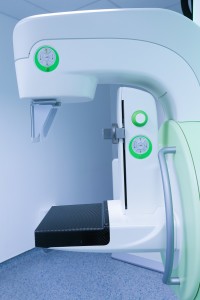
Mammography breast screening device at Green Care
DEXA/BONE DENSITY
A Bone Density Scan is a simple and non-invasive procedure that is used to measure bone mass and assist in the diagnosis of osteoporosis. Osteoporosis is a disorder of the bones characterized by a progressive loss of bone tissue, which can result in an increase in the risk of fractures.
By utilizing a very low dose of X-Rays, the Bone Densitometry machine produces an image of your bones and calculates the strength of the bones.
The test is painless and simple to conduct and has minimal radiation exposure.
Independent Imaging uses The GE Lunar Prodigy Densitometry to provide precise information that can help identify patients at risk for osteoporosis and osteoporotic fractures.
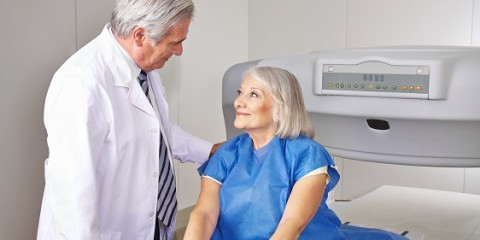
Doctor talking to senior patient prior to bone density measurement in radiology at Green Care
WHOLE BODY P.E.T SCANS
PET/CT stands for Positron Emission Tomography coupled with Computerised Tomography. It is a safe scan that produces a 3D colour image, containing precise information about the organs of that body.
The scan is performed for a number of reasons, including:
- to diagnose a suspected cancer
- to characterise dementias such as Alzheimer’s Disease
- to determine the focus of epilepsy seizures
- to work out if there is living cardiac tissue that will benefit from coronary artery bypass surgery (for example if the patient has suffered a heart attack or have advanced coronary artery disease).
It is different from other investigations like x-rays, diagnostic CT scans, ultrasounds or MRI scans, which shows us what the tissues look like and how they are functioning which helps to identify organs or tissues that are not working properly.
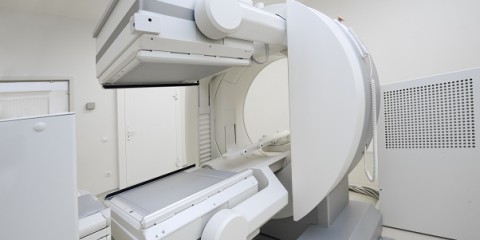
Equipment in radiation therapy at Green Care
CARDIAC LEXI-SCAN
The lexiscan stress test is a stress test for patients who cannot walk on a treadmill. The tracer (cardiolite) is utilized. Images are obtained before the lexiscan is infused and after the lexiscan is infused. This helps to determine if areas of the heart are receiving enough blood or if there are blockages (coronary artery disease).
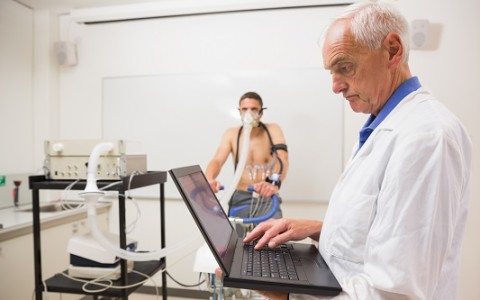
Man doing fitness test on exercise bike at the Green Care
The patient will receive an IV to allow the injection of the tracer. There will be a wait of approximately an hour to an hour and a half before the first images are taken. Patients will then have electrodes (patches) placed on the chest. Several EKGs will be obtained. The patient will receive the medication lexiscan through the IV, replacing the exercise portion of the test. The lexiscan is injected into the IV. This is followed by an injection of the tracer via of the IV. Images will be obtained an hour and a half after the cardiolite injection. The medication lexiscan will dilate the heart’s arteries. If the heart’s arteries are healthy they will dilate more than arteries that are not healthy. The patient may feel flushed, chest pressure or pain, shortness of breath, and or headache.
It is important to follow the preparation of the lexiscan/cardiolite stress test. For 24 hours before the test the following cannot be taken: coffee, tea, colas, chocolates or candies, frosting, cookies, pies, cocoa, milk that contains chocolate, aspirin products that contain caffeine such as Anacin or Excedrin, persantin (dipyridamole), theophylline or theophylline containing products such as Constant-T, Primatene, Quibron, Slo-phylline, Theo-dur and aggrenox. Drinks cannot be taken if they are labeled “ Caffeine free” or “decaffeinated”. It is important not to have any caffeine 24 hours before the test. The patient may not eat or drink after midnight. 4-6 hours should be allowed for this test. A physician will read the test.